Timeline 04 of 06
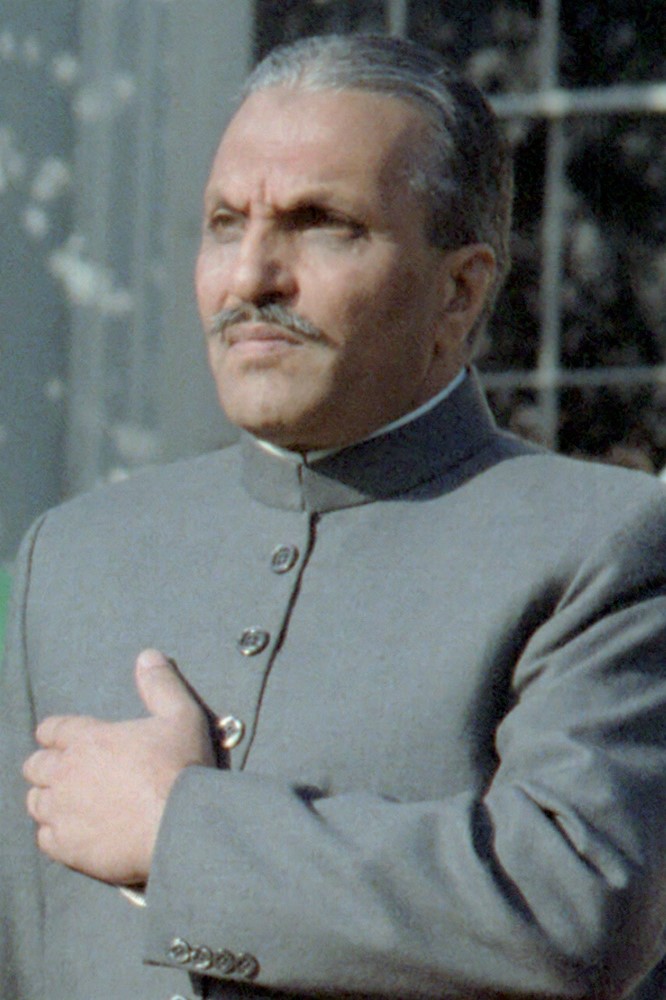
Timeline 04
General Zia-ul-Haq
Military ruler of Pakistan, 1977–1988
Never charged · died 1988
Born12 August 1924, Jalandhar, British India
Life1924 – 1988
General Muhammad Zia-ul-Haq seized power in Pakistan in a military coup in July 1977 and ruled under martial law for eleven years, until his death in a plane crash in 1988.
His rule saw the hanging of the elected Prime Minister he overthrew, the flogging and torture of political prisoners and journalists, and laws that persecuted religious minorities — above all Ordinance XX, which made it a crime for Ahmadis to practise their faith as Muslims. As a brigadier in Jordan he had earlier taken part in the 1970 Black September crackdown. He was never charged with any crime.
Career and record
Scroll to follow events in order
Crime / atrocity
Allegation
Legal / verdict
Career & events
1924
12 August 1924
Born in Jalandhar
Born in Jalandhar, Punjab, in British India.
Early life
1943
1943
Commissioned in the British Indian Army
Serves in Southeast Asia during the Second World War.
Career
1947
1947
Joins the Pakistan Army
Opts for Pakistan at Partition.
Career
1970
September 1970
Black September in Jordan
Posted to Jordan as a brigadier with a Pakistani training mission, he takes part — by several accounts commanding Jordanian units — in King Hussein’s offensive against Palestinian fighters, in which thousands were killed.
Allegation
1976
1 March 1976
Appointed army chief
Prime Minister Zulfikar Ali Bhutto promotes him over more senior generals to Chief of Army Staff.
Career
1977
5 July 1977
Military coup
Overthrows Bhutto in “Operation Fair Play”, suspends the constitution and imposes martial law, promising elections within 90 days. They are not held for eight years.
Coup
1978
May 1978
Journalists flogged
Journalists protesting press censorship are sentenced by military courts and publicly flogged. Political prisoners face lashing and torture in prisons such as Lahore Fort.
Atrocity
16 September 1978
Declares himself President
Takes the presidency while remaining army chief and chief martial law administrator.
Career
1979
February 1979
Hudood Ordinances
Introduces punishments including flogging and stoning. Women who reported rape could themselves be prosecuted for adultery.
Policy
4 April 1979
Bhutto hanged
Bhutto is executed after a murder conviction upheld by a split 4–3 Supreme Court, despite international appeals for clemency. In 2024 Pakistan’s Supreme Court ruled that Bhutto had not received a fair trial.
Atrocity
1983
August 1983
Crackdown on the democracy movement
The army is deployed against the Movement for the Restoration of Democracy, especially in Sindh, where many protesters are killed and thousands arrested.
Atrocity
1984
26 April 1984
Ordinance XX against Ahmadis
Makes it a crime, punishable by up to three years in prison, for Ahmadis to call themselves Muslims, call their places of worship mosques or give the call to prayer. Ahmadis are prosecuted, attacked and killed under its shadow to this day.
Persecution
1986
1986
Blasphemy law made capital
Section 295-C of the Penal Code introduces the death penalty for blasphemy against the Prophet, a law since used heavily against minorities.
Persecution
1988
29 May 1988
Dismisses the government
Dismisses Prime Minister Junejo and dissolves the National Assembly.
Career
17 August 1988
Killed in plane crash
Dies when his C-130 aircraft crashes near Bahawalpur, along with senior generals and the US ambassador. He was never charged with any crime.
Death
Sources
- Wikipedia: Ordinance XX
- Wikipedia: Black September
- Wikipedia: Muhammad Zia-ul-Haq
- Photo source (Wikimedia Commons)
Events are drawn from court records, official inquiries, UN and human rights reports, and news coverage. Where no court has ruled, entries are labelled as allegations.